
DONATE TO GUARDIAN GROUNDS RANCH TODAY!
Provisions:
Where you come to get the things you need. Come back for news, helpful tips, or to check out our supporters.
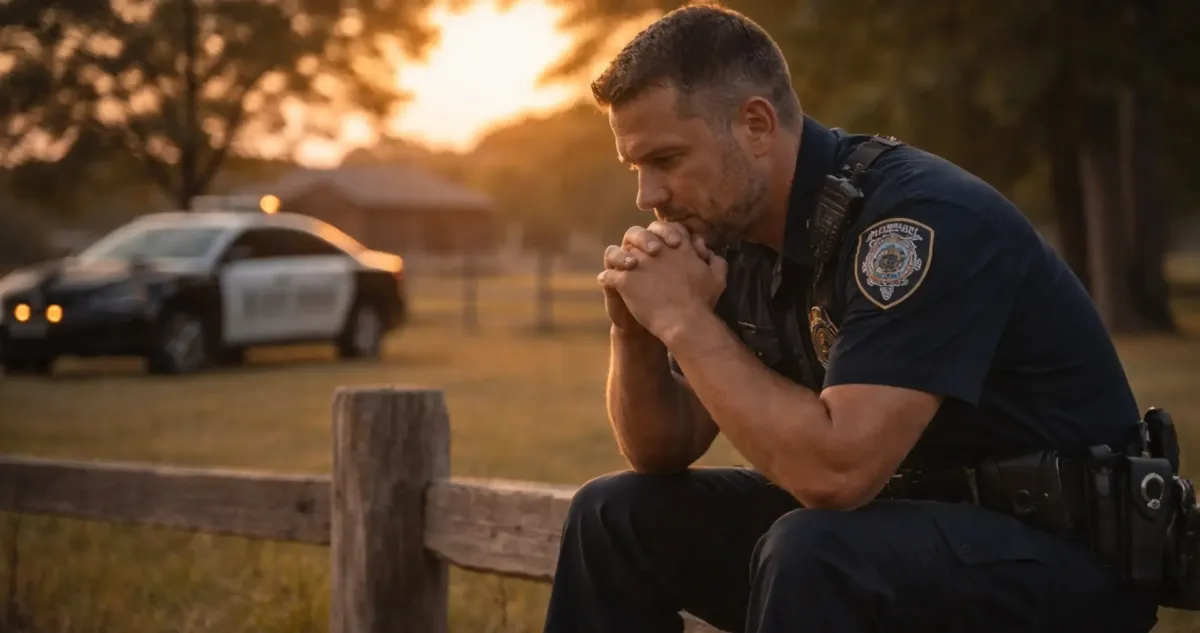
Why Police Officers Avoid Mental Health Treatment (And How We Fix It)
Law enforcement officers in Texas and across the United States operate in a state of hyper-vigilance. Every traffic stop, every domestic dispute call, and every late-night emergency requires them to be at the absolute peak of their tactical and mental awareness.
They are trained to control chaos, suppress fear, and protect the public at all costs.
But what happens when the uniform comes off?
Despite experiencing trauma at a rate exponentially higher than the general population, police officers are notoriously resistant to seeking mental health treatment. The tragic result is a continuing crisis where police suicides often outpace line-of-duty deaths.
At Guardian Grounds Ranch, we work with first responders every day. We know this refusal is not stubbornness. It is rooted in fear, culture, and survival.
In this article, we break down why police officers avoid treatment and how we can finally change that.
Key Takeaways
Police officers often avoid therapy due to fear of retaliation, stigma, and lack of confidentiality.
Department policies and insurance programs frequently discourage honest mental health reporting.
Many officers struggle to connect with civilian therapists who do not understand police culture.
Untreated trauma leads to burnout, substance abuse, family strain, and suicide.
Confidential, peer-supported programs like Guardian Grounds Ranch remove these barriers.
Community support makes life-saving recovery possible.
The Badge and the Burden: The Reality of Law Enforcement Trauma
To understand why officers avoid therapy, you must understand their environment.
Consider a veteran patrol officer in Texas. After fifteen years on the force, he developed insomnia and intrusive flashbacks after a fatal crash.
He needed help.
But he feared:
Being labeled unfit for duty
Losing his firearm
Being placed on desk duty
Losing his career identity
So he stayed silent.
He drank to sleep.
He isolated from family.
This story is not rare. It is common.
The Top 3 Reasons Police Officers Avoid Therapy
1. Fear of Professional Retaliation
In many departments, admitting depression or PTSD triggers a fitness-for-duty evaluation.
Officers fear:
Administrative leave
Loss of badge and weapon
Career derailment
Hiding pain becomes a survival strategy.
2. Lack of True Confidentiality (The EAP Problem)
Employee Assistance Programs are often mistrusted.
Officers know they are department-funded.
They fear:
Reports to supervisors
Broken confidentiality
Career consequences
Without absolute privacy, honesty disappears.
3. The “Civilian” Disconnect
Many officers try private therapy and feel misunderstood.
Law enforcement culture includes:
Dark humor
Tactical thinking
Constant threat awareness
When therapists don’t understand this, therapy fails.
Officers shouldn’t have to protect their therapist.
Immediate Support
If you or a loved one are in crisis, do not fight alone.
👉 GET HELP
The “Tough Guy” Culture: Stigma in the Squad Room
Policing has long celebrated emotional toughness.
Being “strong” meant being silent.
Officers fear being labeled:
Weak
Unreliable
Broken
In a job where partners depend on you, weakness feels dangerous.
So trauma compounds.
Until it explodes.
Changing the Narrative: How We Build Positive Resilience
Mental health injuries are occupational hazards.
We must treat them that way.
If an officer tears a ligament, they receive therapy.
Psychological injuries deserve the same care.
Resilience is not denial.
It is recovery.
Guardian Grounds Ranch: A Confidential Solution for Texas Police
Guardian Grounds Ranch exists to remove every barrier.
How We Are Different
Total Confidentiality
Independent, community-funded, no department reportingPeer-to-Peer Understanding
Surrounded by people who have worn the uniformProactive Healing
Resetting the nervous system in a peaceful environment
We don’t manage symptoms.
We restore lives.
Your Support Is the Ultimate Backup
This work requires resources.
Every donation funds:
Confidential retreats
Professional counseling
Peer support
Recovery programs
When you donate, you save lives.
Frequently Asked Questions (FAQs)
Why are police officers hesitant to seek therapy?
Because of fear of retaliation, confidentiality concerns, and stigma.
What happens if an officer asks for help?
Many departments trigger evaluations. Guardian Grounds provides confidential outside support.
Why don’t officers trust EAPs?
They are department-funded and often perceived as unsafe.
How can families help?
Use empathy, normalize trauma, and connect them to confidential support.
Why is culturally competent therapy important?
Officers need providers who understand police culture and trauma.

Sign Up For Our Newsletter to Get the Details Early!
Copyright 2024 . All rights reserved


