
DONATE TO GUARDIAN GROUNDS RANCH TODAY!
Provisions:
Where you come to get the things you need. Come back for news, helpful tips, or to check out our supporters.
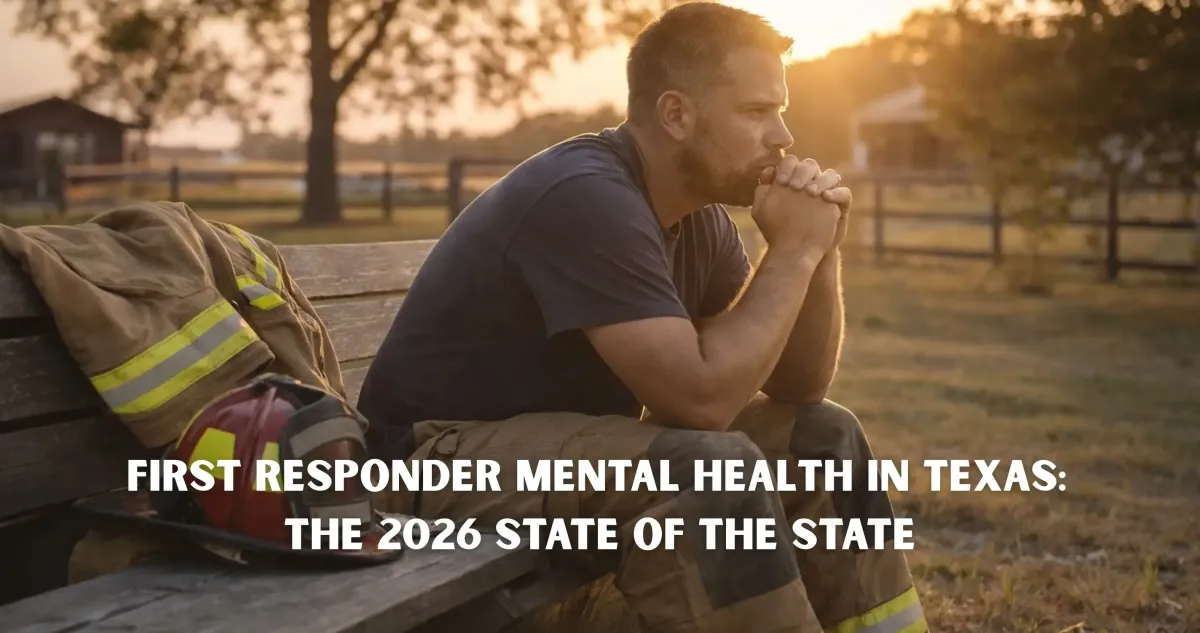
First Responder Mental Health in Texas: The 2026 "State of the State"
When a crisis strikes in Texas—whether it’s a catastrophic hurricane on the Gulf Coast, a devastating wildfire in the Panhandle, or a localized medical emergency right here in our community—we know exactly who to call. Our firefighters, police officers, EMS, and dispatchers are the first to arrive. They see the worst of humanity and nature so that we don’t have to.
But when the sirens turn off and the shift ends, a critical question remains:
Who helps the helpers?
As we look at the landscape of first responder mental health in Texas in 2026, we are facing a hidden epidemic. The compounding effects of continuous shift work, chronic understaffing, and repeated exposure to trauma have pushed our emergency personnel to the brink.
At Guardian Grounds Ranch, our mission is to end the stigma surrounding mental health and provide a safe, confidential haven where Texas first responders can heal.
In this comprehensive "State of the State" report, we are breaking down the realities of first responder mental health, the alarming statistics we must confront, and the actionable steps we can take as a community to build resilience and save lives.
Quick Summary: What You Need to Know
First responder mental health is in crisis across Texas, with suicide rates exceeding line-of-duty deaths in many professions.
Chronic trauma, understaffing, and stigma prevent many firefighters, police officers, and EMS personnel from seeking help.
Burnout and depression are different—and untreated trauma impacts families, careers, and physical health.
Healing requires confidential, judgment-free support and a culture that prioritizes resilience over punishment.
Guardian Grounds Ranch provides specialized, peer-supported recovery for Texas first responders.
Community support and donations directly save lives by funding free, confidential treatment.
The Hidden Crisis: First Responder Suicide Statistics in Texas
There is a tragic reality within the first responder community that is rarely discussed at press conferences or community parades.
Year after year, more firefighters and police officers die by suicide than in the line of duty.
While exact numbers fluctuate as reporting methods improve, 2025 and 2026 data projections continue to highlight a severe crisis.
Nationally, studies indicate that law enforcement officers and firefighters are significantly more likely to die by suicide than the general public.
In Texas, the sheer volume of emergency calls—driven by a booming population and increasingly complex public safety challenges—means our responders are carrying an unprecedented cognitive load.
Why Are the Numbers So High?
To understand the statistics, we have to understand the environment.
First responders do not just experience one traumatic event. They experience cumulative trauma.
The "Tough Guy" Culture
For decades, the culture within firehouses and police precincts has been one of extreme stoicism.Fear of Repercussion
Many responders fear that admitting to depression or suicidal thoughts will result in losing their badge, gear, or career.Hyper-Vigilance
Constant high alert prevents the brain from resting, leading to chronic sleep deprivation and depression.
What is the True Impact of Unaddressed Trauma?
When first responders do not have a safe, confidential outlet to process what they see on the job, trauma manifests in other ways.
It bleeds into their personal lives, their marriages, and their physical health.
The Difference Between Burnout and Depression
It is easy to look at an exhausted paramedic and assume they are just "burned out."
However, burnout and depression are two different battles.
Burnout
Physical exhaustion, cynicism, and reduced effectiveness. Often relieved by rest.Depression and PTSD
Deep emotional and psychological injury, including sadness, isolation, anger, substance use, and hopelessness.
Immediate Support
If you or a loved one are experiencing a crisis right now, do not wait.
👉 Crisis Support: CLICK HERE
Changing the Narrative: Healing the Helpers
For too long, first responder mental health has been treated reactively and punitively.
An officer or firefighter struggles, makes a mistake, and is punished or sidelined.
This only deepens the crisis and discourages others from speaking up.
The 2026 "State of the State" requires a paradigm shift.
We must move from punishment to resilience.
At Guardian Grounds Ranch, we believe mental health struggles are normal reactions to abnormal events.
If someone breaks a leg, we send them to physical therapy.
The brain deserves the same care.
Building Resiliency in a Positive Manner
Real change starts with families, friends, and leadership.
Educate Yourself
Learn subtle signs like withdrawal, irritability, and increased drinking.Normalize the Conversation
Create safe spaces for honest conversations.Provide Confidential Solutions
Protect privacy so help-seeking feels safe.
Guardian Grounds Ranch: A Safe Haven for Texas First Responders
Guardian Grounds Ranch fills the gap.
We are a confidential retreat designed by and for first responders.
We understand the culture, humor, schedules, and traumas of emergency service.
Our facility provides:
Peer-to-peer support
Professional counseling
Quiet recovery spaces
Long-term resilience programs
We don’t just want responders to survive.
We want them to thrive.
Your Support Saves Lives
This is the most important part of this report:
We cannot do this alone.
Your donation directly funds confidential, life-saving care.
When you give, you are saving lives.
👉 Donate Here: CLICK HERE
Frequently Asked Questions (FAQs)
What is the leading cause of death for first responders?
Studies consistently show that first responders are more likely to die by suicide than in the line of duty.
Why do police officers and firefighters avoid mental health treatment?
Because of stigma, fear of job loss, and confidentiality concerns.
What are the signs of depression in first responders?
Chronic exhaustion
Isolation
Substance use
Irritability
Loss of interest in hobbies
What should I do if a first responder in my family is suicidal?
Listen without judgment.
Remove access to firearms if possible.
Connect them to confidential support immediately.
How is Guardian Grounds Ranch different from standard therapy?
We provide specialized, peer-supported, confidential care built specifically for emergency personnel.

Sign Up For Our Newsletter to Get the Details Early!
Copyright 2024 . All rights reserved


